
BPO · Practical guide
Learning Outsourcing SOW and SLA: What to Define Before Handover
Define workload, retained responsibilities, response measures, pilot acceptance and exit arrangements before transferring learning operations.
By Cyberwisdom Group · Learning operations editorial
Start with the work, not an SLA number
A learning outsourcing statement of work should explain which activities transfer, which decisions stay with the customer and what evidence proves that the work is complete. An SLA then defines how selected service measures are calculated and reviewed. A response target without a defined queue or working calendar is difficult to interpret.
The practical aim is to make the agreement usable by the people who submit requests, perform tasks and approve results. They should be able to identify whether an enrollment correction, content update or technical incident is in scope without reopening a sales presentation.
Define demand and the unit of work
Document the expected user population and groups, but also the monthly volumes of sessions, enrollments, changes, support contacts and reports. Explain how a request is counted, when it is complete and whether several related actions form one item. Record seasonal peaks and the initial backlog separately.
A service with several languages or time zones needs an explicit coverage model. List operating hours, holidays, channels and dependencies. Avoid a phrase such as global support unless the underlying coverage has actually been agreed. There is no universal staffing ratio or transition duration that fits every workload.
Make retained responsibilities operational
Name the customer roles responsible for audience approval, policy interpretation, access authorization, budget decisions and final acceptance. Name the parties responsible for platform engineering, content correction and identity issues. A responsibility matrix helps only when each role has a practical decision and escalation route.
Record what happens when required information is missing. Can the provider return a request, place it on hold or escalate it? Which person can approve an exception? These rules prevent incomplete work from disappearing into an apparently healthy queue.
Separate response from resolution
Response time measures the agreed first action after a valid request enters the service. Resolution time measures the completion condition. Define the clock, business calendar, priority, start event, stop event and any permitted hold conditions. Different request types may need different measures.
When an LMS supplier must repair a defect, the operating team can own evidence gathering and escalation without controlling the supplier’s repair time. Make that dependency visible in reporting. Do not close an unresolved incident simply to satisfy a target, and do not imply that an acknowledgement is a completed fix.
Use quality and exception measures together
Track whether completed tasks match approved instructions, whether records reconcile and whether rework is required. Pair those checks with queue age and outstanding exceptions. A provider processing requests quickly can still create problems if the wrong cohort receives an assignment or a report uses the wrong denominator.
For reporting, define the population, period, exclusions and completion rules. For content publishing, define the approved package version, launch checks and acceptance owner. For learner support, define when confirmation or a documented escalation satisfies the request. These are practical acceptance criteria rather than generic performance slogans.
Transfer through a controlled pilot
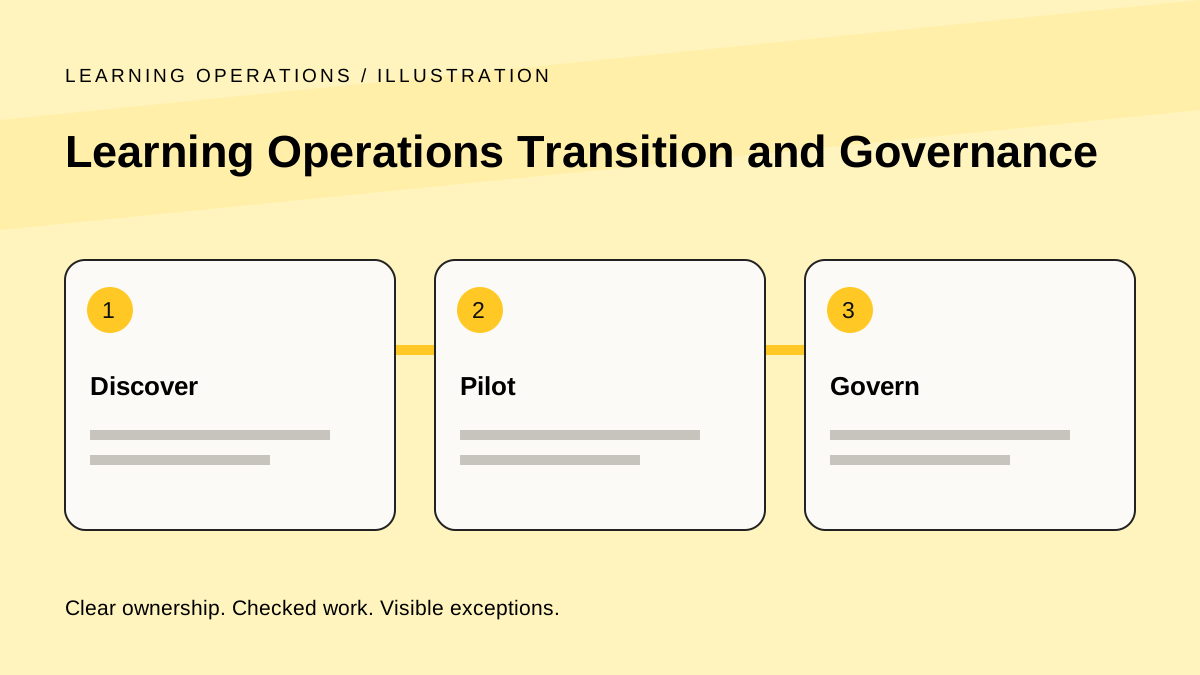
Baseline current demand, backlog and known issues before handover. Prepare access and runbooks, then select a representative pilot. Review its outputs against the agreed acceptance criteria. Expand only when the responsible customer owner accepts the evidence and unresolved dependencies have a clear treatment.
An illustrative transition could start with a course enrollment workflow and one management report. The pilot includes incomplete data and an approval exception, so both teams learn how those cases move. It is a method example; the right pilot and timetable depend on the customer’s environment.
Plan change and exit before the service begins
Record how new courses, markets, languages, modules or request volumes affect the scope. Agree who can authorize a change, what impact assessment is needed and when revised terms take effect. Keep decisions and runbook changes traceable so that the operating model does not drift through informal messages.
Define the return of customer records, open requests, approved procedures and service knowledge at exit. Include access removal and the treatment of unresolved incidents. An orderly exit provision supports continuity even when both parties expect the relationship to continue. Bring these points to the initial scope discussion so that the quotation reflects a service people can actually operate.
Explore the related services
Discuss the work you want to delegate
Tell us which LMS you use, who you support, the recurring tasks and the service coverage you need. We can scope an operating service around the work.
Discuss your learning operations ↗